The Official LIONS Creators Report 2026
The creator industry is transforming how businesses reach and connect with their customers. Discover what the changes mean for brands, agencies and creators
Welcome to LIONS Creators 2026: The home of a maturing industry
Simon Cook

Simon Cook
CEO
LIONS
The global marketplace is undergoing a significant structural shift as the creator economy reaches a new level of maturity – and the creator is no longer just a media channel for brands, but a business partner.
As the home of creativity, LIONS is proud to champion this evolution through LIONS Creators, our curated experience designed to foster collaboration between creators and the global creative marketing industry. At Cannes Lions 2026, for the third iteration of LIONS Creators, we evolved our commitment to this sector by bringing together some of the world’s most influential content creators and forward-thinking brands and agencies to define the new rules of creator commerce.
The stakes are immense: as we heard on stage at the LIONS Creators Beach, 77% of consumers now prefer to consume creator content, and more than 50% of people are making purchase decisions based on creator-led messaging. This shift is reflected in global investment: according to research by WPP, TikTok and System1, which debuted at LIONS Creators 2026, creator spend is growing 24% year on year – four times the growth rate of average media channels. By 2030, the creator economy is estimated to reach US$500bn.
As LIONS Creators speakers emphasised, success in this landscape requires more than a transactional approach: it requires “human relevance”. In a world of infinite content, it’s argued that creators act as the bridge that turns attention into trust, and trust into thriving communities and commerce opportunity.
This report synthesises the key insights from the LIONS Creators 2026 programme across three core pillars: the professionalisation of creators, the evolution of brand–creator collaboration and the vital role of humanity and culture in an AI-driven world.
We hope it serves as a strategic blueprint for everyone in the creator economy and for agencies, brands and platforms looking to understand how this industry is evolving.
Official LIONS Creators Partner 2026

Manuel Albuquerque

Manuel Albuquerque
CEO
Primetag
This year’s Festival marked a defining moment for the creator economy. For the first time, more than 250 creators were part of the official programme, while more than 2700 creators posted over 5300 pieces of content about Cannes Lions during the Festival’s week, reaching 229 million people and generating US$13.3m in media value. Creators have become the Festival’s megaphone, amplifying Cannes Lions well beyond the Palais.
We left Cannes Lions wanting to know whether that recognition is reflected in how brands actually work with creators. So we looked beyond the Festival, at 12 months of sponsored brand collaborations on Instagram across five of the largest consumer groups, covering around 27,000 creators and 192,000 pieces of content – stories included.
Every brand we examined brings in new creators at a similar rate. Across beauty and technology, new creators accounted for between 12% and 27% of the roster. The differences start after that.
Where brands diverge is in what follows. Retention ranged from 5% to 68% across comparable programmes in the same year. At most of them, the majority of creators worked with the brand a single time. On the LIONS Creators Beach stage, Studio EH’s Eugene Healey made the case that creators are most effective for long-term brand building rather than short-term demand capture – our data points exactly the same way.
Brands with stronger retention drew more from the same group of creators. At the strongest in our sample, repeat creators represented 55% of the roster and produced 88% of the content. The work also tended to perform better: repeat creators recorded higher median engagement rates at four of the five brands, with the advantage greatest where brands had invested most in continuity, the long-term, consistent approach Dove’s Marcela Melero spoke to at the Festival. Some of this is selection, not cause: strong performers get asked back. But the pattern held consistently enough to merit attention.
What struck us most is how rarely brands have this picture of themselves. Almost every marketer can report the reach of a campaign. Far fewer can say how many of last year’s creators returned, and that single question points to the shift the Official LIONS Creators Wrap-Up 2026 maps out. This report offers a blueprint for building a creator strategy around the right metrics and, above all, around lasting partnerships. The opportunity is simple: measure creator work as a relationship rather than a placement, and manage it as one.
The creator CEO playbook
“It all starts with you.”
This is what Mel Robbins, New York Times bestselling author of The Let Them Theory and host of The Mel Robbins Podcast, said to the audience at the LIONS Creators Beach during her session on how she turns ideas into movements. “If you’re not clear about who you are or what you want to create or who you’re trying to impact,” she added, “you will spin in circles and drive yourself crazy”. Her own proposition? “My work is for the person standing in front of me in line at the grocery store. If you can’t make a difference with that person, you’re never going to get on my podcast.”
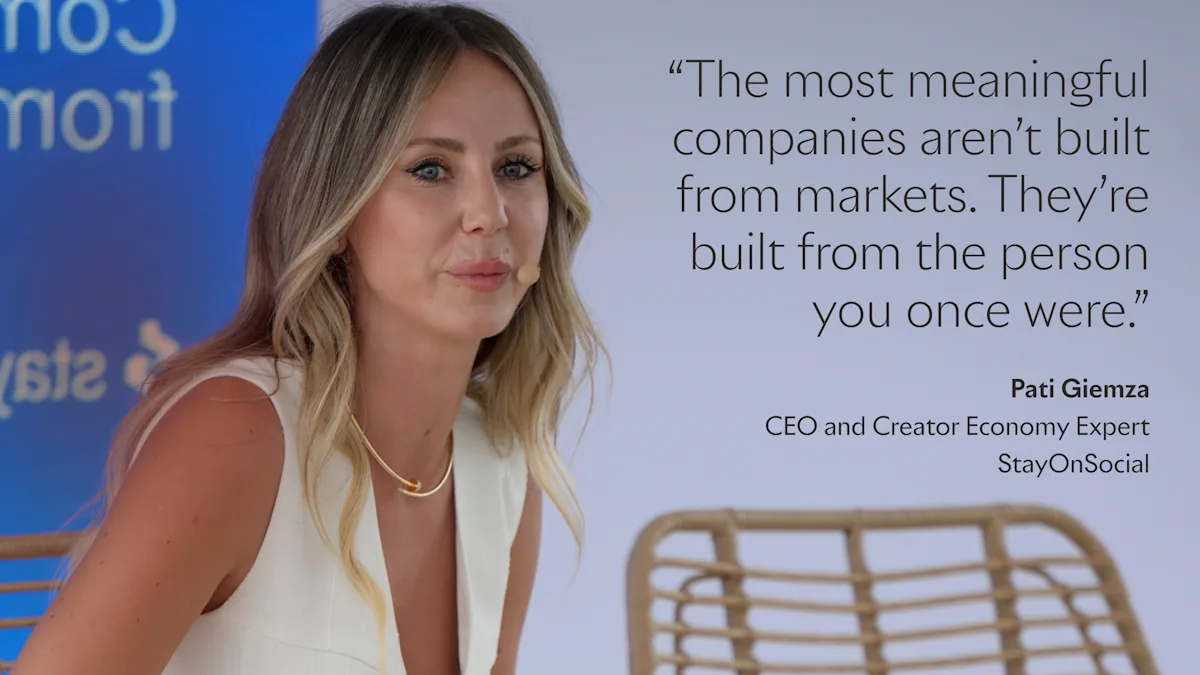
Robbins wasn’t the only one who urged creators to think hard about what their personal brand is. Sammi Cohen, who worked in big tech before building a thriving media brand around her podcast, Social Currency, talked about the importance of “understanding what you want out of creating content”. Speaking at a Group Chat hosted by Adobe on how to scale content and reach new audiences, she advised delegates to “be very focused and have your North Star” – even if that North Star ends up changing as you “evolve as a human being”.
That room for flexibility around branding that Cohen was talking about was described as an important benefit of being a content creator by the Internet’s resident librarian, Inklings Book Club host Jack Edwards. “We can adapt so quickly,” he said during a UK Creator Showcase hosted by TikTok. “If you’ve made a TV series and people are not connecting with episode 2, you’ve got another six episodes that are filmed and produced and ready to go. You can only adapt for season 2 – whereas we can be constantly innovating.”
And this is because your audiences will help you determine your next steps when something isn’t working, according to Grace Keeling – i.e. GK Barry, host of the successful UK show and podcast Saving Grace: “We’ve got people’s opinions constantly, so we do know if they don’t like it. You can ask people, what do you want to see from me? And they’ll tell you. It makes it so much easier.”
While flexibility is important, however, so is authenticity. In a world of abundant content, a creator’s identity can help them stand out, argued SeeMe Index CEO and Co-Founder Asha Shivaji. She offered three examples of content creators who have leant into their unique identities in ways that have differentiated them – and that brands can also benefit from.
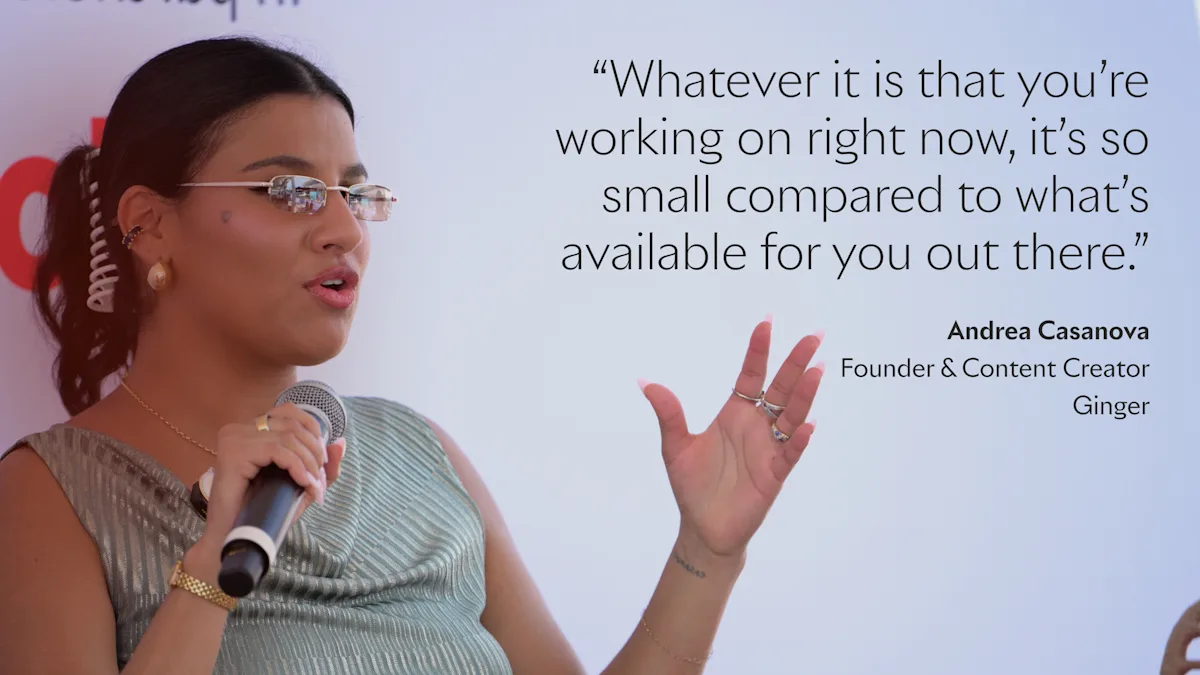
Venezuelan-born viral marketer and content creator Andrea Casanova also talked about the importance of identity and community: “My Latino community, my Latinas,” she said, “are literally the reason I’m standing right here right now.” To support her point, the Founder of AI inbox management tool Ginger shared an anecdote from a brand collaboration at the start of her career, where she made the mistake of giving away her image in perpetuity. The real loss, however, wasn’t just her face: it was the “access to our communities”, which Casanova values more than any brand deal: “No matter how big the cheque is, I have to be mindful of that.”
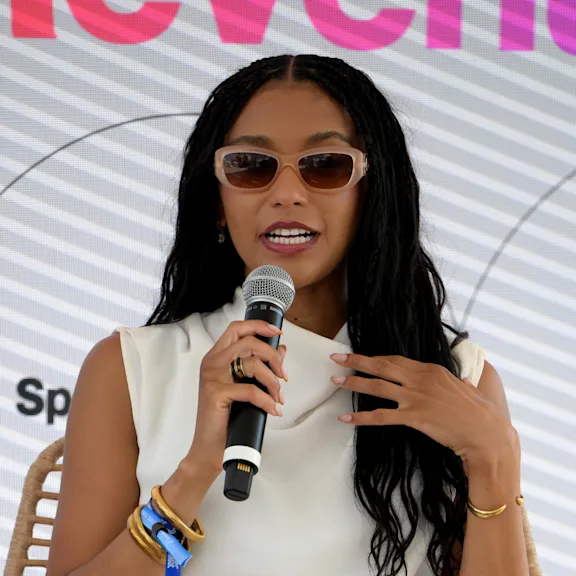
“You have to have a personal brand – and you have to be that person in real life, too.”
Alexis Barber Creator, CEO and Author Too Collective
Mel Robbins made a similar point about long-term ownership over your personal brand. “There are times in your life,” she said, “where you need to chase the money. And I’ve had those times when you have liens on your house. Chase the f*cking money. But then you get to a point where I never make a deal I’m going to be pissed off at. You’re going to be mad about the things that you value that you no longer have control over.”
This is particularly crucial in the current context of social media algorithms becoming much less predictable, according to Steven Bartlett, Founder of Steven.com and host of the world’s second-largest host-led podcast, The Diary of a CEO. Bartlett started out as a tech entrepreneur before becoming a creator, and he continues to invest in new businesses through Dragons’ Den, a reality programme on UK broadcast channel BBC One. He proclaimed that “the follower is dead” – and told a packed LIONS Creators Beach that they must “own” their relationship with their audience, not “rent” it.
This is also crucial for brands seeking partnerships with content creators, as CORE Founder JT Barnett explained – because creators must “make things that make the algorithm easier to match”, and that can only happen through “organic relationships” and “organic connections”.
Have a strategy, not a wish
“Figure out your goals,” Emily Sundberg, Founder of seven-figure Substack empire Feed Me, urged content creators. “Is it having some sense of balance? Is it to make as much money as possible? Is it to be famous?” In her case, she explained, focusing on a small but valuable audience on Substack has meant that she’s able to keep her “peace of mind” and “not have to worry about growth, hacking through [or] engaging with other accounts”. This approach has served Sundberg well, with publications ranging from The New York Times to Cultured describing her as her generation’s “Carrie Bradshaw”, i.e. the ultra-successful columnist leading HBO’s famous Sex and the City TV series and spin-offs.
Kleo Founder Lara Acosta, who has amassed millions of views on LinkedIn, shared a similar view in a Group Chat on ‘How Creators Drive B2B Marketing Impact’. She asserted that content creators must choose what works best for them and their content – and fight against the industry’s tendency to overlook nuance.
Jun Yuh, a content creator with more than 8 million followers and Founder of creator coaching platform Creator College, also talked about the importance of being intentional with content: “If you’re just posting random content whenever and however you like,” he said, “it will never work – and, likely, you will burn out.” During his session on how to ‘Turn Attention into Revenue’, he outlined a four-part framework of the different “missions” that content must serve in order to reach – and grow – the right audience. According to Yuh, followership remains important – but you must nurture your relationship with the people who view your content instead of obsessing solely over view figures.
Beyond content strategy, many LIONS Creators speakers urged content creators to develop a business mindset – and be practical about it. “When you’re a content creator, it’s very easy to assume that the money coming in is your money,” said ‘weatherman of marketing’ Joel Marlinarson, Founder of Coldest Creative, during a Group Chat on ‘Building Sustainable Creator Businesses’. “That is business money. That should be in a separate account. You shouldn’t even consider that accessible. You are building something that should compound in the future.”
In the same Group Chat, Tyler Chou, Founder and CEO of Tyler Chou Law for Creators and CreatorArq, encouraged creators to focus on the “unsexy” parts of being a business, such as having “clean books”, avoiding copyrighted music in videos or adding IP ownership clauses to all contracts. She also recommended that they build an email list or a community beyond social media platforms to diversify their revenue streams: “If your YouTube channel goes down tomorrow, is your entire business gone?”
And AJ Eckstein, Founder and CEO of creator-focused marketing agency Creator Match, advised creators to think of themselves as the “Head of Sales” of their own brand and focus on nurturing relationships in the same way that agencies do with brands – because this is the best way to attract collaborations in the long term.
Creators were not the only ones told they should be approaching the creator economy with a business mindset. Eckstein said brands should have a “sports team” of content creators on their roster, replete with “headliners”, “middle-tier” and “smaller” creators.
Austin Null, Chief Creator Officer at creator-led agency We Get It, agreed, arguing that “many brands and agencies are scared of modernising the work”. His agency’s long-term vision, he explained, was to build a holistic “creator brand studio” where creators are afforded the opportunity to influence marketing campaigns at the inception stage instead of being brought in at the end. Jessica Serrano, CMO at Bagel Brands, a We Get It client, shared the LIONS Creators Beach stage with Null to show what that looks like – and why it’s been beneficial for one of her company’s brands, Einstein Bros.
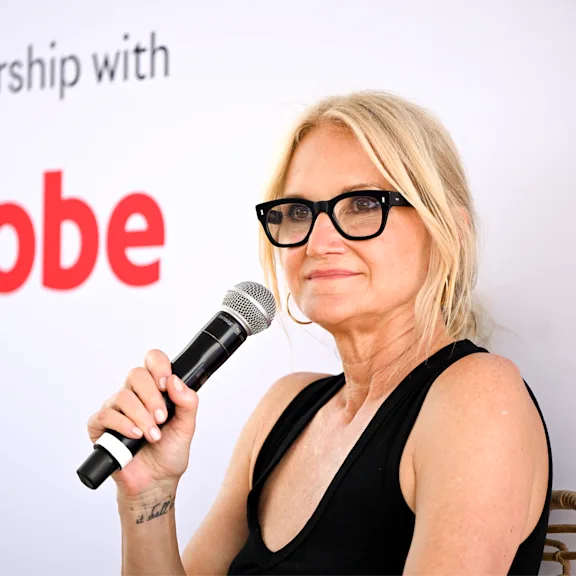
“Who is it for? What is it for? If you can’t answer these two questions, you don’t have a strategy. You have a wish.”
Mel Robbins Host, The Mel Robbins Podcast, SiriusXM #1 New York Times bestselling author, *The Let Them Theory *
Rewriting the brand–creator partnership rules
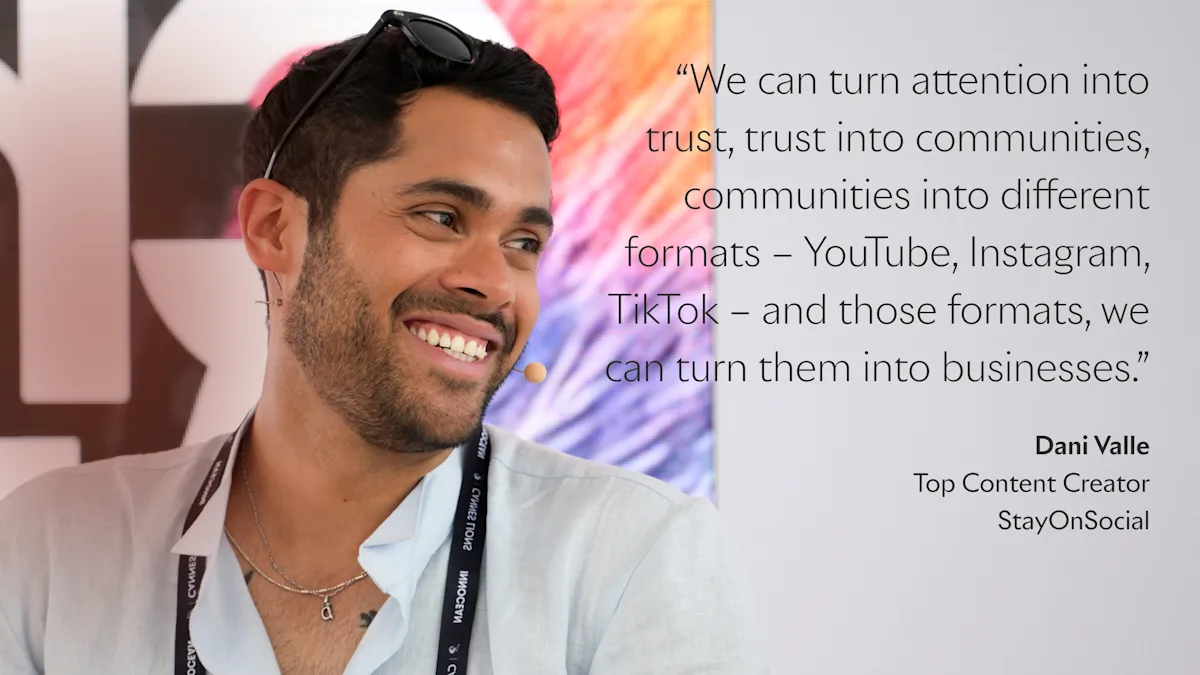
“The most impactful and viral campaigns are no longer traditional advertisements. They are ideas co-created by brands and creators.”
Noe Chessari, Founder and CEO of LATAM-based creative communications agency NINCH, asserted this during her session at LIONS Creators 2026. Consumers are being bombarded with content every day and actively avoiding advertising as a result, she explained. This is why creators are so important for brands: “Creators are not the channels. Creators are the cultural interpreters.”
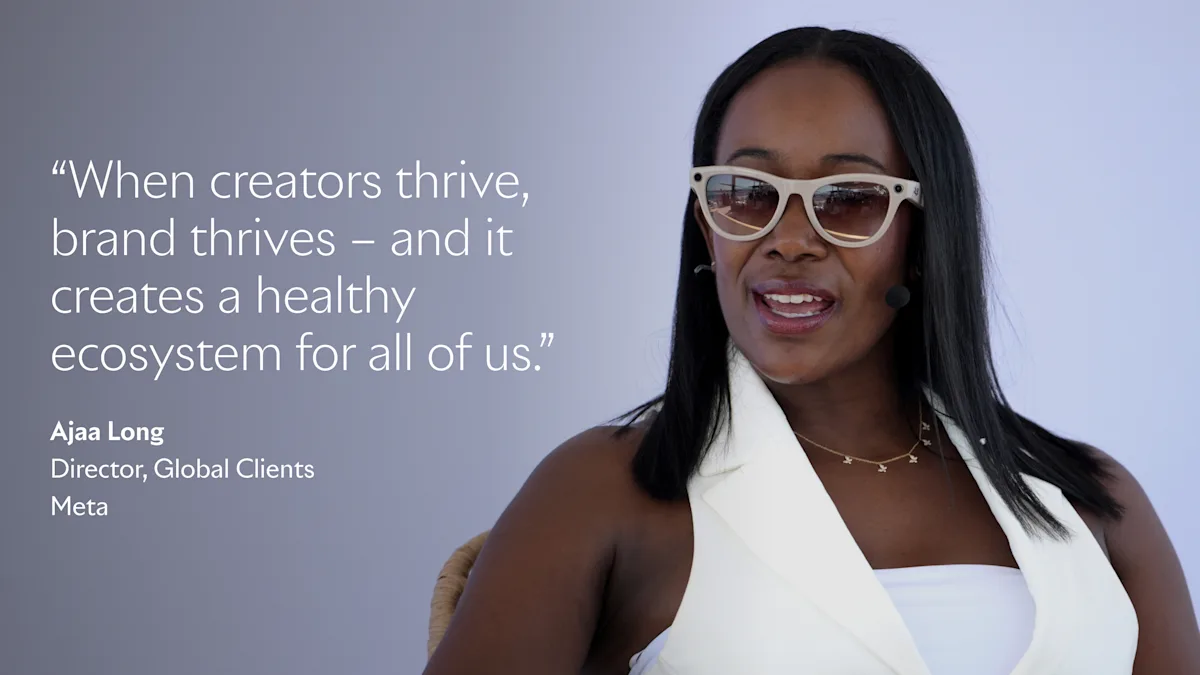
Chessari gleaned this from anecdotal experience at her agency – but the data presented throughout the week at the LIONS Creators Beach supports her stance: SeeMe Index CEO and Co-Founder Asha Shivaji shared that 77% of consumers in the US now prefer content by creators over traditional advertising. And Meta’s Director of Global Client Partnerships Ajaa Long revealed that creators influence more than 50% of the US population’s buying behaviours. Long attributed this to creators’ “authentic, trusted point of view” – and she wasn’t the only one.
Sheryl Goldstein, Executive VP and Chief Industry Growth Officer at the Interactive Advertising Bureau, said that creators can help a brand progress quickly from “no awareness” to “purchase” because their followers trust them. American actor and comedian Hannah Stocking, who rose to prominence through her viral videos on Vine, echoed this: “No one knows their audience like the creator.” Audiences, Stocking said, can see through inauthentic content. By contrast, well-executed brand–creator partnership posts don’t even register to them as ads.
PFStudio Founder Grace Wells, whose viral series Making Epic Commercials for Random Objects has accumulated more than 167m views, described the relationship between a creator and their audience as “symbiotic”. Wells launched her series in the early days of TikTok, during the Covid-19 pandemic – and quickly realised that her followers were getting “invested” in her content. As a result, she became “more and more attuned to what really, truly educates them and excites them and entertains them”. Brands have an opportunity to leverage this symbiotic relationship, according to Wells.
But this can only happen if brands recognise that creators are skilled at what they do and embrace their feedback, said Leslie Mosier, Founder of Doug the Pug, one of the world’s most recognised pet brands. Eleanor Neale, host of popular true crime podcast OUTLORE, concurred, inviting brands to “let the reins go”. And brand strategy consultant Eugene Healey commented that in any brand–creator collaboration, the brand should be the “canvas” and the creator the “painter” – because audiences will only care if the creator manages to make them care.
Giving creators more freedom, however, doesn’t mean giving them “full control”. Creators still need a clear brief that explains the campaign’s goals and the creator’s role in them, according to Healey: “What is the strategic challenge that we are trying to work through with this piece of content? What is the context? So, not just ‘what we want you to do’, but ‘what is your role within the context of the broader campaign? What is the desired audience? What is the tension that we want to solve?”
To help brands strike the right balance, TBWA\Chiat\Day Los Angeles’s Irina Kirvesmäki and Janni Widerholm outlined what they call ‘The Creator-to-Creator Brief’. This involves identifying what strengths the brand and the creator have in common – and using them to create “disruptive content” together. “Once you find that intersection,” Widerholm said, “the brief really starts to write itself.”
Also important is a mutual understanding of a campaign’s desired outcomes, according to Creator Match Founder and CEO AJ Eckstein. He advised creators to make it a habit to ask their partners – be they brands or agencies – what success looks like to them.
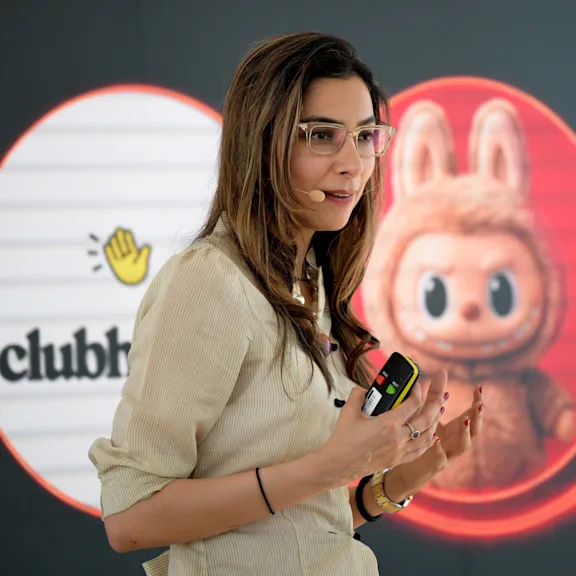
System1’s Chief Growth Officer Andrew Tindall agreed. In his session on ‘The Creator Effectiveness Playbook’, he revealed new research from WPP Media, System1 and TikTok, which found that 50% of marketers don’t measure the performance of brand–creator collaborations – and a third of those who do measure it only use “short-term efficiency” metrics like ROI. Tindall implored marketers to retire metrics like impressions and engagement rates and focus more on building “brand memories” – with the help of creators who are an “authentic fit” for the brand.
Investing in better working relationships – literally
One of the largest benefits of working with content creators, according to PFStudio Founder Grace Wells, is their ability to be “scrappy” – and cut production costs without compromising on quality. Recent advancements in consumer technology, she explained, have democratised access to high-quality lighting equipment, cameras and video editing software. In addition, as most creators work alone or with a small team, they can “offer shorter development schedules” and “cut out a lot of the layers and extra costs”.
This doesn’t mean, however, that brand–creator collaborations require zero investment from the brand. In ‘The Creator P&L: How Money Is Actually Made (and Lost)’, lifestyle creator and Too Collective CEO Alexis Barber shared her personal struggles when it comes to partners respecting payment terms – and explained why it would be beneficial for brands to settle invoices promptly and possibly even pay production costs up front.
On-time payment wasn’t the only issue raised on stage at LIONS Creators. In the same session, Doug the Pug Founder Leslie Mosier advocated for the implementation of a healthcare coverage system for creators – while Ginger Founder Andrea Casanova urged brands to offer benefits like studio access, networking opportunities and company equity in exchange for a creator’s services.
Eugene Healey, who has a long-term partnership with market research firm Tracksuit, spoke about what such benefits can signal to the market. Healey negotiated the right to purchase company shares at Tracksuit when they were setting out the terms of their collaboration and is now a proud investor. Healey, who shared the stage with System1 Chief Growth Officer Andrew Tindall, said that this is “a reflection of both my and System1’s view that creators actually function best as long-term brand building, not demand capture”.
Beyond employee perks, Leslie Mosier also called for stricter laws to protect creators from unscrupulous practices. Mosier, who built a global franchise centred on her pet Doug the Pug, shared that she has frequently experienced attempts from brands to breach the terms of their contract with her, such as the agreed-upon length of a shoot – compromising Doug’s welfare as a result.
Nick Primola, Group Executive VP at the Association of National Advertisers in the US, also urged the industry to agree on a set of “common practices” for brand–creator collaborations. He warned that there is already a “gigantic gap” between “haves and have-nots”, with bigger brands being able to dictate their own rules. Keen to encourage more fruitful collaborations, his co-speaker Sheryl Goldstein said brands and creators must educate each other on the appropriate terms of engagement.
“We, as marketers, need to ask ourselves, are we doing right by creators? Because if you’re not, then you’re not being fair to them – or to yourselves.”
Kaveri Khullar SVP Marketing, Asia Pacific Mastercard
Creators as the infrastructure of culture
“Culture is everywhere.”
Margot Hauer-King, SVP of Creative Strategy in the advisory arm of the United Talent Agency, was unequivocal about this: “Culture is driving commercial results across every stage of the sales funnel.”
Hauer-King’s assertion came as part of a session unveiling new research by the UTA on what makes a brand culturally relevant. The study analysed 10,000 leading global brands across 44 industries against publicly available metrics, custom research, and proprietary UTA data. And it found four factors that have a meaningful impact on a brand’s cultural value: “originality”, “values alignment”, “timeliness” and “mainstream zeitgeist”. Hauer-King said that the most “culturally strategic” brands partner with the “right creative voices” and channel into “true culturally resonant moments that overlap with their brand” in the most appropriate moments.
The importance of culture in marketing is nothing new, of course. As NINCH Founder and CEO Noe Chessari said, the marketing industry has been “obsessed with cultural relevance” for at least the past decade. What LIONS Creators speakers argued is changing is how brands can tap into culture – with creators now being an inextricable part of the process.
Jennifer Richardi, Head of Brand and Creative at DoorDash, declared: “Culture lives and dies on social.” Richardi urged brands to be present in social media platforms to get a better understanding of what their customers like and dislike and what interests them. Kaveri Khullar, SVP of Marketing for Mastercard in Asia Pacific, added that brands also have to find a way to “move the conversation beyond the social feed into communities”. According to Khullar, the best way to achieve this is to treat creators as “the spine of [a brand’s] strategy”.
Nigerian media personality and content creator Tomike Adeoye explained why: “Creators aren’t just shaping culture. We are building the infrastructure that culture moves through.” Adeoye said that in the past, we had “models on billboards” – but today brands are turning to the creator economy because creators “understand the power of community”.
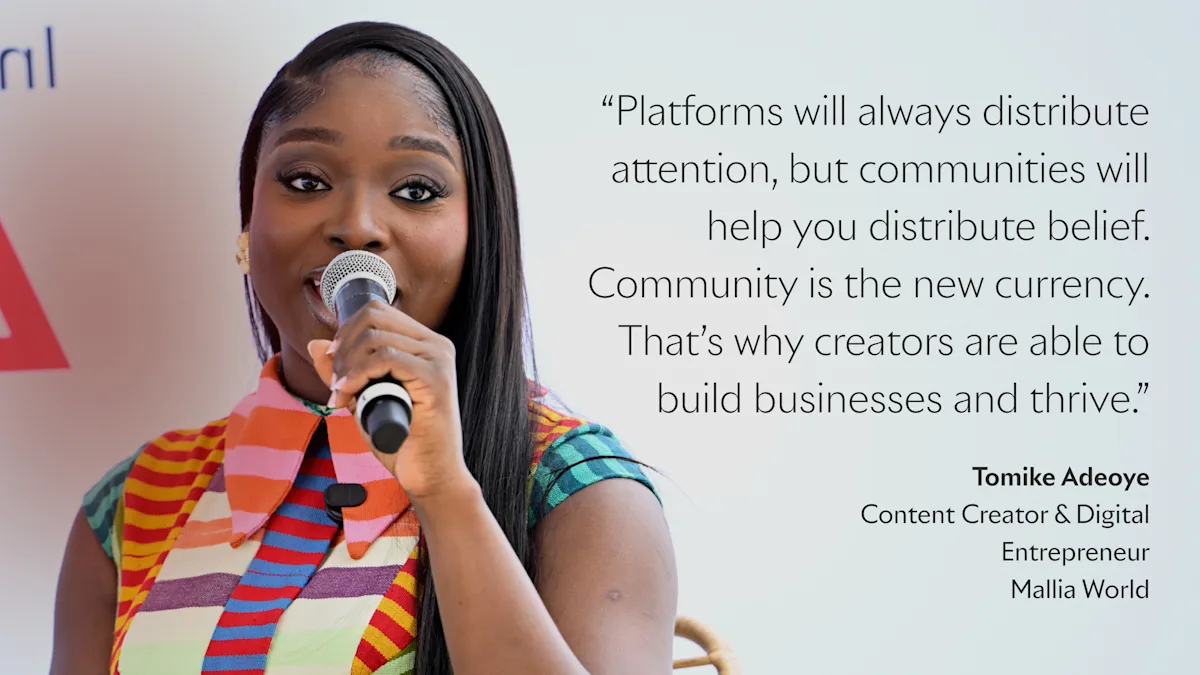
In the same session on ‘How Africa’s Creatives Are Building Culture as Infrastructure’, Ghanaian sports content creator Bernice Boakye Ansah, who has built a community of more than 5 million followers across platforms, warned brands that they can’t “force” themselves into culture and community. Speaking about the misconception that African creativity is an “emerging force”, she explained that if brands want to harness the continent’s culture, they must “participate” in it.
CMO of Mercedes-Benz USA Melody Lee made a similar point, explaining that there are some brands that interpret cultural relevance as “being at the right event or in the right movie”. She disagreed with this view: “True cultural relevance comes from being a relatable, authentic and real brand for everyday users.” Her advice on how to achieve it? “Leverage creator marketing.”
“Every single brand in the world is now a brand that has to actually understand culture.”
JT Barnett Founder CORE
Part of tapping into culture authentically is acknowledging the diversity of the audience that each brand serves, according to SeeMe Index CEO and Co-Founder Asha Shivaji. Her co-speaker Melody Lee agreed: “Multicultural marketing is marketing, period.” She shared how Mercedes-Benz USA’s collaboration with a content creator who has Ehlers-Danlos syndrome created an opportunity for the brand to increase awareness of its cars’ safety features. And Patrick O’Keefe, e.l.f. Beauty’s Chief Integrated Marketing Officer, described how the brand’s mission to represent “every eye, lip and face” led it to RuPaul’s DragCon, a fan convention featuring prominent drag performers.
What about the current sociopolitical context, though? Sheryl Goldstein, Executive VP and Chief Industry Growth Officer at the Interactive Advertising Bureau, was adamant. “Look at the upcoming generations,” she said. “They’re as diverse as diverse can be. If you think you don’t need to market this way to these folks any more because it’s not ‘cool’ or ‘proper’ or ‘politically correct’, you’re the one who’s going to lose. You’re not going to attract employees and you’re not going to have consumers down the road – because that is the future.”
The irreplaceably human
One thing that became clear throughout the week at LIONS Creators 2026 was that the rise of AI has made the human side of creators more valued than ever.
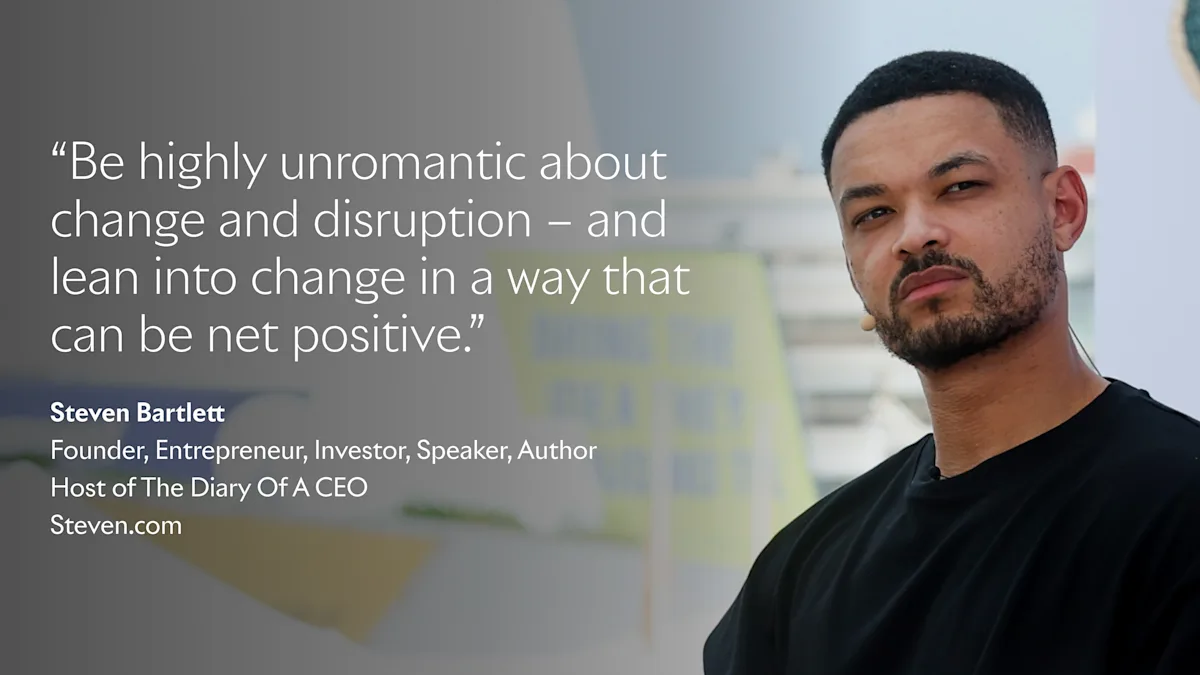
“In a world of AI, the thing that’s going to be a moat is the irreplaceably human – your lived experience. There’s only one of those,” said Steven Bartlett, host of the world’s second-largest host-led podcast, The Diary of a CEO, and Founder of Steven.com.
PerfectTed’s Co-Founder Marisa Poster echoed this. Poster launched her US$67m matcha brand after moving to the UK in 2020 and discovering that her beloved beverage wasn’t as readily available in her new home as in the US. She stated that “borrowed knowledge is not as productive or efficient for building [as] earned knowledge” – and “AI slop” will never achieve the same “relatability element” as human content that’s “intrinsically you”.
According to Twitch CEO Dan Clancy, the reason behind this focus on humanity is the growing “mistrust of what’s going on in social media”, especially among Gen Z and Gen A. Clancy explained that AI content has made it hard to distinguish what’s real and what’s not, giving the example of videos of animals doing extraordinary things that used to be greeted with joy but are now met with a heavy dose of scepticism. He argued that this is driving a deeper yearning for “authentic moments” and connections.
German content creator Nikolai Savic had a similar view, suggesting that as technology progresses, it’s only going to get harder to separate AI from human content. Savic, who gained fame through his viral Let Him Cook series and has since garnered more than 600m views, invited fellow creators to take their audiences on a journey behind the scenes – showing not just the “outcome” but also the human “process”, “art” and “struggles”. His goal? “To become the blueprint of real art of social media in a world where AI is taking over everything.”
Content creators’ ability to connect with audiences on a human level is yet another reason brands must prioritise their relationships with them, according to Noe Chessari: “The internet solves distribution. AI solves production. But neither solve trust. That’s why creators have become so important.”
“Creators have become one of the most powerful trust systems in modern communication.”
Noe Chessari Founder and CEO NINCH
Focusing on the human side of creators doesn’t mean that there’s no use for AI in the creator economy, however. LIONS Creators speakers such as Steven Bartlett, Tomike Adeoye, Ajaa Long and Andrea Casanova shared how AI can support the creative process by accelerating production workflows and removing barriers. What they did warn audiences about is treating AI as a replacement for creativity.
Nick Primola, Group Executive VP at the Association of National Advertisers in the US, described language learning models as “driving a car [that’s] faster than you’ve ever driven, but you’re only looking in the rear-view mirror”. His co-speaker, Mollie Rosen, President of Member Experience at the 4As, agreed: “LLMs are optimised to normalise. They’re looking for patterns of things that have already happened.” This leads to “the lowest common denominator”, she argued, urging the audience to use AI to “accelerate” what they already do – but to maintain their “unique point of view” and “personality” and be mindful of “where [AI] optimises versus diminishes the impact”.
Don’t miss the chance to be where it all happens. Register your interest for Cannes Lions 2027 here.
If you would like access 2026 Festival talks from LIONS Creators and the rest of the Cannes Lions Festival, as well as all the winning and shortlisted work and more LIONS editorial content, subscribe to The Work here. You can search for talks by speaker name or by talk title. See the 2026 LIONS Creators programme here.
Other Cannes Lions 2026 reports
Cannes Lions Creativity Report 2026
The need-to-know trends, exclusive insights and biggest observations from the winning work.